Business Waste Removal in Highgate

Business waste removal in Highgate needs to be practical, regular and arranged around the way a premises actually works. We handle collections for offices, shops, studios, hospitality spaces and other commercial settings, with a focus on removing mixed waste efficiently and separating items that can be reused or recycled where appropriate. The aim is straightforward: keep work areas clear, reduce clutter, and make disposal manageable without adding unnecessary disruption to the day.
Commercial waste streams can change quickly, so our service is built around flexibility rather than a single fixed pattern. A one-off clearance may suit a refit, a move, or a backlog that has built up over time, while repeat removals can help premises stay on top of ongoing waste from normal activity. Where useful, we can discuss the types of material involved so the collection is planned around access, loading, segregation and the likely handling needed for the items on site.
There is no need to overcomplicate the first enquiry. If you already know the general type of waste and the broad amount involved, that is often enough to start a quotation request. Clear descriptions help, especially when the items include bulky furniture, mixed office contents, or heavier materials that need special care. If you are comparing options for a workplace clearance, a short outline of the task is usually the most useful starting point. Request a quotation when you are ready.
Commercial waste collections tailored to the premises
Different businesses generate different kinds of waste, and it is rarely helpful to treat them all the same. A back office clearance may involve archive materials, dismantled desks and general rubbish, while a customer-facing site may have packaging, broken fittings, display items or outgrown stock. Our business waste removal service is intended to cope with those mixed loads in a controlled way, so the collection matches the situation rather than forcing the site to work around a rigid process.
For many premises, timing matters as much as the clearance itself. Collections often need to fit between trading hours, deliveries, staff movements or building works. When access is tight, it helps to think about routes, stairs, shared entrances and any items that need to be separated before the load is moved. If the waste includes office furniture or fixtures, it can also be useful to decide whether items should be taken as they stand or broken down first. That kind of planning keeps the work focused and avoids extra handling later.
We can also support businesses that need to clear areas in stages. In some cases, it is better to remove the contents of one room, storage section or floor at a time rather than deal with everything together. That approach can be especially helpful where the premises must remain partly operational. If you need to organise a collection around a larger clear-out, use a brief description of the site and materials to help shape the quotation.
Office, retail and light commercial clearances

Office and retail clearances often involve a combination of furniture, filing, packaging, display items and general waste. A practical collection needs to take account of both the items themselves and the way the space is used. Desks, cabinets, chairs, counters and shelving may need careful movement through shared corridors or stairwells, while paper-based material can need separate handling from other loads. We keep the work focused on what is actually present, rather than forcing it into a one-size-fits-all structure.
Where workplaces are changing layout, closing a branch or replacing older equipment, a business waste removal visit can remove redundant items in one organised sweep. That can include outdated furniture, worn stockroom fittings and accumulated waste from rearrangement or refurbishment. It is often useful to decide early whether items are to be retained, recycled, reused or simply removed, because that makes the overall clearance more efficient. For premises with multiple rooms, labelling the areas to be cleared can also save time on the day.
Useful points to include when asking for a price are the type of business, the main items to be removed and whether the site has any access constraints. Photographs can help, but a short written summary is just as useful when the load is small or straightforward. If you already know that the collection involves office furniture or mixed commercial contents, say so at the outset so the estimate reflects the job properly.
Furniture, fixtures and bulky items
Many commercial clearances are dominated by bulky items rather than loose rubbish. Tables, chairs, storage units, cabinets, counters and reception furniture can take up more space than expected and may need to be carried through tight internal routes. Our furniture disposal and removal work is designed for those heavier or awkward pieces, with attention to safe handling and sensible loading so the waste is removed without creating avoidable damage to the premises.
Some items are easier to deal with intact, while others are better separated before collection. Flat-pack units, modular shelving and office partitions may need to be dismantled, whereas robust items can often be moved whole if the route allows it. The right approach depends on the material, size and condition of each item, as well as whether the premises are still in use. Where a collection includes a mixture of furniture and general waste, sorting the items before removal can make the process more orderly.
Bulky items also affect the estimate because they change the amount of lifting, the loading time and the space needed in the vehicle. That is why it helps to mention any large furnishings, built-in pieces or awkward shapes when you request a quotation. If the job includes several distinct categories, we can look at them together and decide how best to approach the collection.
Office contents, records and confidentiality

Some commercial waste removal jobs involve more than furniture and general rubbish. Offices may need archive clearing, secure disposal of paper records or removal of items that should not simply be mixed with the rest of the waste. In those situations, it matters to handle the material in a way that suits the type of content involved. Confidential shredding can be relevant where paper documents, draft files or obsolete records need to be dealt with more carefully than ordinary waste.
Office contents can also include monitors, small electrical items, shelving, stationery stock and equipment that has reached the end of its use. The best method depends on what is present and whether items can be separated into meaningful groups before removal. If you are clearing a workspace after an internal change, it may be worth identifying which items are to stay, which are to be reused elsewhere and which are simply ready for collection. That distinction keeps the clearance focused and reduces uncertainty on the day.
For businesses that handle sensitive material, a clear conversation at quotation stage is important. Mention the types of documents or equipment involved, the approximate amount, and whether the clearance needs to be completed in one visit or arranged in stages. That information helps to shape an accurate and practical plan, especially where the collection includes both confidential items and ordinary office waste.
Refurbishment, fit-out and builders waste
Refurbishment projects often generate mixed waste very quickly. Offcuts, packaging, broken fixtures, old fittings and dismantled contents can build up around the work area and slow progress if they are left in place. Our builders waste clearance and business waste removal services can help keep commercial projects tidier by removing the accumulated material once it is ready to go. That keeps the site more workable and gives contractors or managers a clearer view of what remains.
Fit-outs and alterations can also produce waste that is heavier or more awkward than ordinary daily rubbish. Plasterboard, timber, metal sections, flooring pieces and removed units may all require careful separation and loading. Where the work is taking place in an occupied premises, access and timing become especially important. It is often sensible to think ahead about where waste is stored temporarily, whether lifts or stairs are available, and what can be moved safely without interfering with the active parts of the site.
If the job forms part of a wider project, a simple list of the materials involved can be more helpful than a long explanation. List the main waste types, note any bulky items, and mention whether the clearance is linked to a renovation or strip-out. That gives a clearer starting point for the quotation and helps the collection be arranged around the actual site conditions.
Recycling, reuse and responsible handling
![A collection of discarded household waste items including various plastic bottles, glass bottles, paper, and cardboard packaging, all arranged on a flat surface. The bottles are of different shapes, sizes, and colours, with some featuring caps of bright colours such as red, yellow, and pink, while others are clear or green. There are also aluminium cans, one of which is crushed, and a metal container among the waste. A rolled-up sheet of newspaper and crumpled paper are visible on the right, alongside a few cardboard boxes, some flattened, with one partially opened. The background appears neutral or indoor, with the waste items occupying the central foreground, emphasizing the variety of materials that a professional rubbish removal service like Business Waste Removal Highgate can handle in the local area, including [POSTCODE] and surrounding neighbourhoods. The overall scene depicts a typical scenario of domestic waste ready for collection or disposal, with a focus on the diverse materials that often require professional attention in Highgate or nearby parts of London.](/pub/_photos/rubbish/f1350696256.jpg)
Commercial waste removal should be about more than simply moving items away. Where materials can be separated sensibly, recycling and reuse are often part of the process. This is particularly relevant for office furniture, metal items, cardboard, mixed packaging and some electrical equipment. A considered approach helps reduce the amount of material that needs to be treated as general waste and gives the collection a clearer structure from the outset.
Not every item can be handled in the same way, and some loads contain a mixture of recoverable and non-recoverable material. For that reason, it helps to identify obvious groups before collection rather than waiting until everything is piled together. If a business has stock, fittings or furniture that might be suitable for reuse, say so early, because that may affect how the clearance is planned. Good sorting also makes it easier to keep the site organised while the work is carried out.
We also consider practical limitations. Certain items may need special handling, some loads may be unsuitable for routine collection, and some materials may need to be kept separate for safety or processing reasons. If you are unsure how to describe what is on site, a few plain sentences are enough. The aim is to get the job scoped correctly rather than to produce a detailed technical inventory.
About Highgate
Highgate is a hilltop district in north London, known for its steep streets, historic buildings and the way old and new layers of the city sit close together. The name is closely associated with Highgate Village, where narrow lanes, period houses and small independent premises create a more intimate feel than the wider urban area around it. One of the district’s most recognisable features is Highgate Cemetery, established in 1839 and now famous for its dramatic Victorian architecture, planted grounds and cultural associations. The cemetery’s west and east sections are among the best-known historic burial grounds in London, and they remain important for both heritage and landscape value. Highgate Wood, an ancient woodland managed as public open space, offers a very different setting from the built streets nearby, while Waterlow Park adds terraces, trees and broad views across the city. The area also sits close to Hampstead Heath, whose open ground, ponds and slopes contribute to the wider character of north London’s high ground. Architecture in Highgate ranges from older village buildings to later terraces and detached houses, with a number of listed structures reflecting the district’s long development. The combination of conservation areas, green spaces and residential streets gives Highgate a distinct identity within the boroughs it touches, and the built fabric still reflects a history shaped by elevation, transport links and gradual suburban growth.
Clearing different kinds of commercial waste
Business waste removal can cover a broad range of materials, but each category benefits from a slightly different approach. General rubbish, furniture, packaging, office contents and refurbishment debris do not behave the same way when they are being moved, loaded or separated. A good service keeps those differences in mind and adapts the work accordingly, rather than assuming that every collection will look identical. That is especially useful where the premises contain a mix of old stock, bulky fittings and day-to-day waste.
Some businesses need help with recurring waste from ordinary operation, while others only need a one-off clearance after a move, closure or redesign. In both cases, it is helpful to think about the scale of the job and the site conditions before arranging the collection. If access is difficult, the waste is spread across multiple floors, or certain items must be taken apart first, those details should be included in the enquiry. It is better to mention them early than to leave them out and adjust later.
When there is a clear idea of the main waste type, the quotation process becomes more straightforward. You can also let us know whether the clearance is urgent, staged or linked to another project, because the pattern of removal may affect the most suitable arrangement. For many commercial customers, a single well-described request is enough to begin.
Sorting, access and the practical side of collection
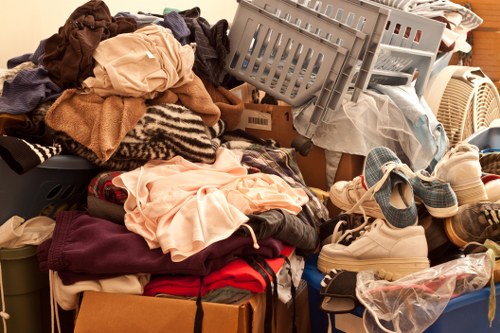
Practical planning is often the difference between a collection that feels smooth and one that creates unnecessary interruption. Access routes, loading points, stairs, parking and shared entrances can all influence how a business waste removal job is carried out. If the premises are busy, it may also be useful to identify the best time window for moving larger items. A bit of preparation at the start can reduce handling time and help the clearance stay focused.
Sorting is another area where a little attention goes a long way. Items that need to be kept, reused, recycled or removed should ideally be separated before the collection begins. That does not mean a full inventory is needed, but it does help if the main groups are identified clearly. For instance, office furniture, paper waste, electrical items and loose rubbish may each need a different treatment. A simple list can make the process easier for everyone involved.
Before you request a quote, it may help to gather three basic points: what needs removing, how much there is, and whether the site has any access limitations. Those details are usually enough to start. If you are ready to move on, send the summary and ask for a quotation; if you would rather talk it through first, keep the same information to hand and use it as the basis for the conversation.
Quotations for offices, shops and workspaces
Quotations for business waste removal should reflect the actual scope of the job, not a vague guess. A workspace with a few redundant chairs is very different from a full office clearance or a site with mixed refurbishment debris. The most useful quotation requests describe the item types, the approximate volume and any limitations that may affect removal. That makes it easier to plan a collection that is realistic for the premises and the material involved.
It can also help to mention whether the waste is concentrated in one area or spread around the building. A reception clearance, for example, may be very different from a stockroom clearance or a multi-room office job. If the work involves several categories, a short note about which items are the priority can make the arrangement more precise. We use that information to shape the collection around the job rather than asking you to fit the job to a generic process.
For a straightforward enquiry, a concise message usually does the job: type of premises, main materials, approximate amount and preferred timing. If you need to compare options or plan a larger removal, that same information can support a more detailed discussion. Ask for your quotation when ready, and include enough detail for the scope to be understood clearly.